
Why U.S. Investors Are Less Worried About National Debt And Maybe They're Right
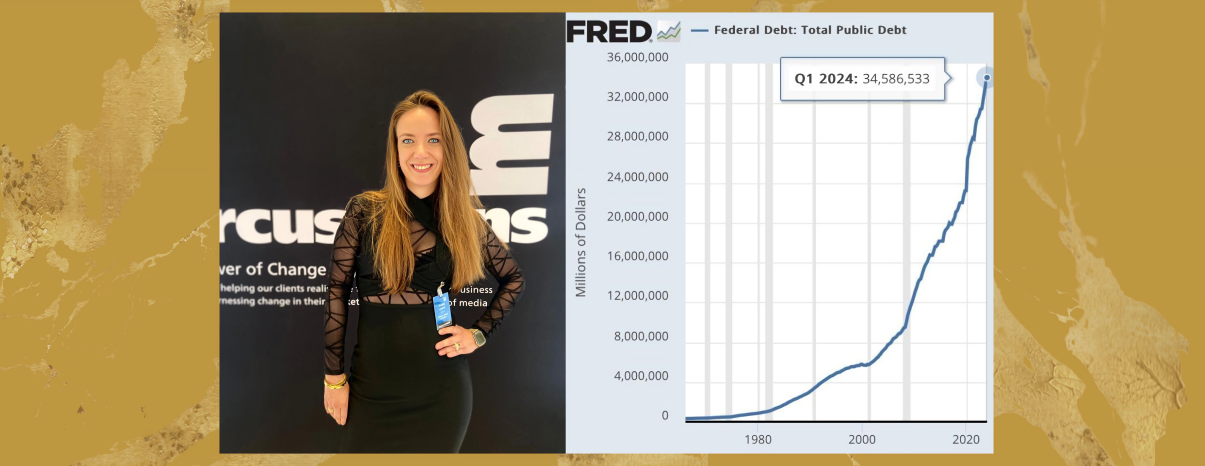
At a time when the United States is adding over $1 trillion to its national debt every 100 days, the concern among global observers is growing. Surprisingly, many American investors appear relatively unfazed by this escalating figure. Their confidence may seem misplaced at first glance after all, the national debt now exceeds 130% of GDP but there may be sound reasoning behind their calm demeanor.
This sentiment was evident during the Marcus Evans Private Wealth Management Summit in Boston, where numerous investors shared their perspectives on the issue. While the numbers are staggering, the U.S. is far from alone. Japan, for instance, currently holds the highest debt-to-GDP ratio in the world at 237%. Yet it continues to function without the economic instability that such a ratio might suggest.
One key factor that sets the United States apart is its control over the world’s reserve currency: the U.S. dollar. This global dominance affords the U.S. significant economic leverage. Central banks across the world hold dollars for trade, foreign exchange reserves, and economic stabilization. As a result, U.S. monetary policy has global implications, forcing other nations to adapt accordingly.
The concept of a nation maintaining control over the world’s reserve currency is not new. The Dutch Republic once held that status through the Dutch florin, driven by the global reach of the Dutch East India Company (VOC) between 1600 and 1800. However, history also offers a cautionary tale. When the VOC lost its war against the British in 1784, it triggered a chain of events that destabilized the financial system.
The Bank of Amsterdam, believing the VOC was too important to fail, began injecting large sums of newly printed money into the company. Interest rates climbed, and the value of the florin declined, eroding trust in the currency. Eventually, excessive claims on hard currency reserves led to a bank run, and by 1816, the Dutch florin was replaced by the guilder marking the end of its reign as a global standard.
Despite growing U.S. debt, the dollar shows no immediate signs of losing its dominance. Confidence in the currency remains intact, and as long as that trust is preserved, the debt levels themselves may not be as catastrophic as they seem.
Many American investors argue and perhaps rightly so that what truly matters is not the absolute size of government debt, but the earning capacity and growth trajectory of the economy behind it. As long as the U.S. economy remains productive, innovative, and globally influential, the markets may continue to absorb high debt levels without triggering a systemic crisis.
In an increasingly complex global economy, trust, history, and perception matter just as much as numbers. For now, the U.S. dollar remains the cornerstone of international finance and that, more than any ratio, may be the real reason investors remain confident.