
Understanding the Many Faces of Capitalism
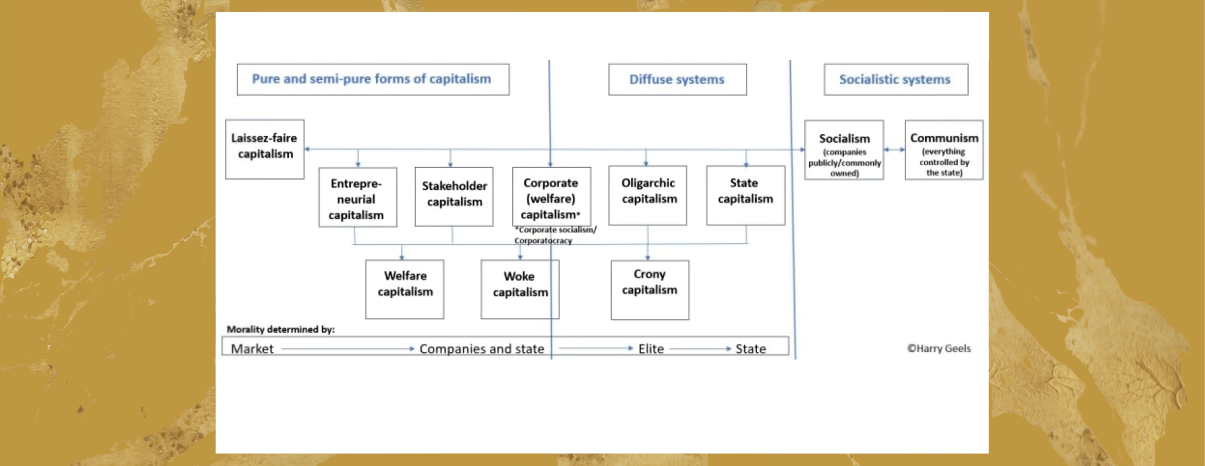
The term capitalism is often the subject of widespread misunderstanding and criticism, frequently blamed for a variety of social and economic issues. Popular books like Less is More by Jason Hickel and Doughnut Economics by Kate Raworth highlight capitalism’s negative impacts but often overlook the complex variations within the system itself. This lack of nuance hinders meaningful discussions about what truly works and risks undermining effective market mechanisms driven by ideology.
Capitalism is not a single, uniform system. Just as morality and governance vary widely, so do the forms of capitalism. While many sources mention different “types of capitalism,” clear visual overviews are rare. Economist Harry Geels offers a useful framework illustrating capitalism’s diverse expressions from laissez-faire to corporatocracy and stakeholder capitalism each with distinct societal impacts.
For example, China’s state capitalism features strong government control, whereas Russia’s oligarchic capitalism reflects a post-communist elite-driven economy. On the spectrum, stakeholder capitalism highlights capitalism’s evolving nature, focusing on balancing the interests of all parties involved.
Currently, many societies exhibit a form of corporate welfare capitalism, often intertwined with social movements like “woke” culture. However, some argue for a return to a blend of entrepreneurial capitalism and welfare capitalism a system that promotes innovation and business growth while maintaining social protections like healthcare and education. This approach aims to foster economic growth alongside social justice, balancing market freedom with responsible governance.
Recognizing the many faces of capitalism is essential for informed debate and creating economic systems that serve society effectively.